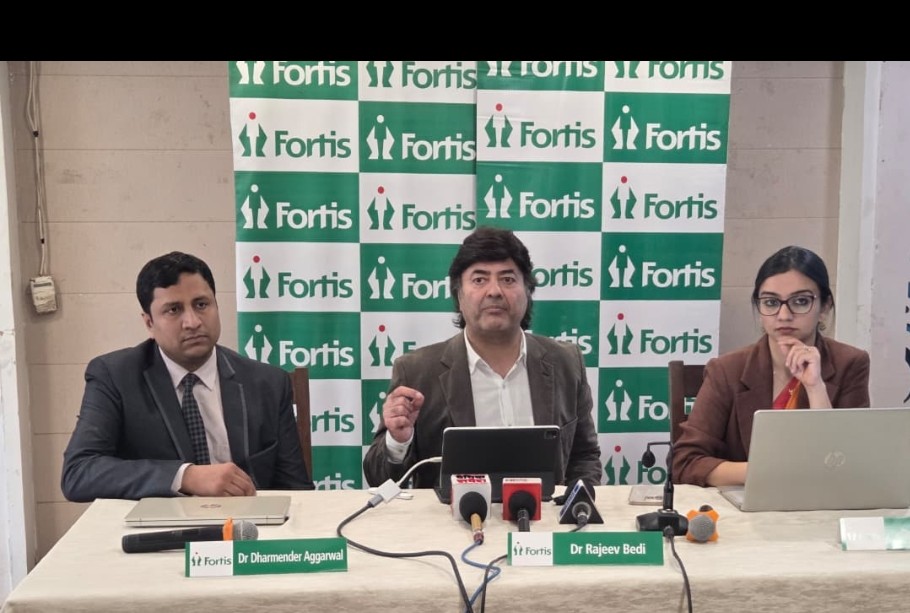
Chandigarh, February 18, 2026: Senior Cancer specialists from Fortis Cancer Institute, Mohali, highlighted how early diagnosis significantly improves cancer survival outcomes and quality of life, at a Cancer Awareness Health Talk held in collaboration with Chandigarh Press Club. The event, attended by over 80 media persons, aimed at educating the community about early detection, prevention, and medical advances in cancer treatment. The session witnessed active participation, reinforcing the growing need for informed and timely cancer care.
Doctors from the Oncology Department led by Dr Rajeev Bedi, Director, Medical Oncology; Dr Deepti Singh, Consultant, Breast and Endocrine Surgery; and Dr Dharmender Aggarwal, Consultant, Uro-Oncology and Robotic Surgery, briefed the media-persons regarding symptoms leading to cancer and sensitized them on various screening methods for the early detection of the disease.
Addressing the media on the occasion, Dr Rajeev Bedi, Director, Medical Oncology, Fortis Cancer Institute, Mohali said, “World Cancer Day is a platform to raise awareness about cancer, its treatment and prevention. Sustained efforts are needed to educate people on the disease. Early screening and diagnosis is the need of the hour. We can beat cancer with appropriate treatment if detected at an early stage. Any abnormal signs and symptoms should be brought to the notice of a doctor immediately.”
While sensitizing the women journalists on the symptoms of breast cancer, Dr Deepti Singh, Breast and Endocrine Surgery, Fortis Cancer Institute, Mohali said, “Women should be careful to identify some symptoms such as a new lump in the breast or underarm (armpit), thickening or swelling of the breast, dimpling of breast skin, changes in colour of areola or flaky skin on the breast, pulling in of the nipple, nipple discharge or pain in the nipple area. These signs do warrant a medical examination. Early diagnosis is the need of the hour. It is important to note that young patients may also have symptoms that mimic cancer but not every lesion is malignant. Women above 40 years old should undergo an annual mammography test, while those below 40 should get an ultrasound to help detect any malignancy.”
Discussing prostate-related problems, Dr Dharmender Aggarwal, Consultant, Uro-Oncology and Robotic Surgery, Fortis Cancer Institute, Mohali, said, “Any abnormal or cancerous growth in the prostate gland is termed as prostate cancer. The symptoms include blood in urine, increased urine frequency, weak urine flow and other urinary symptoms may develop as a result of prostate cancer.
However, these symptoms occur in only 20% of the cases. More than 80% of the patients do not experience any symptoms related to prostate cancer. Most of the time, prostate cancer is diagnosed after a PSA screening test, advised as a routine investigation in men above 50 years of age, especially those with urinary symptoms. A PET scan can further help to properly stage the disease.”
Leave a Reply